What Is GRP Roofing?
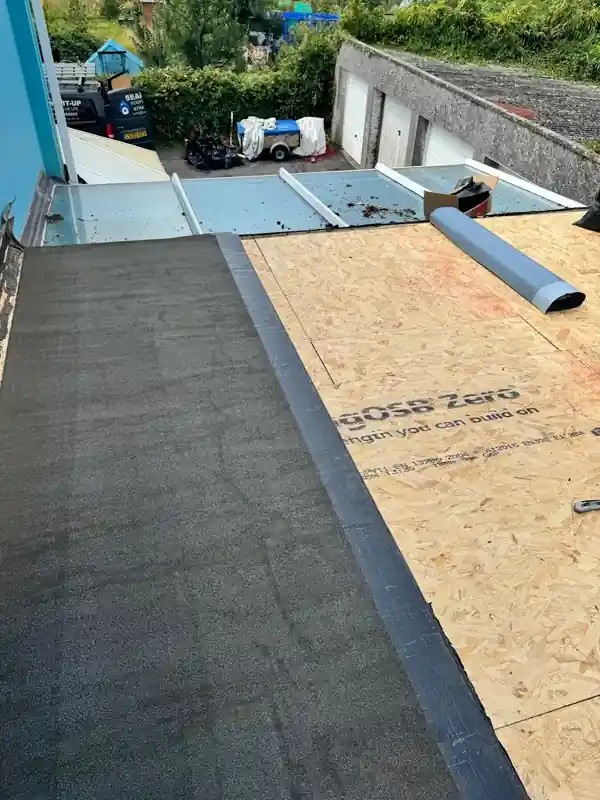
GRP (Glass Reinforced Plastic) roofing, also known as fibreglass or FRP (Fibre Reinforced Polymer), delivers a seamless, waterproof flat roofing system with exceptional durability and structural strength. Unlike traditional felt or single-ply membranes, GRP forms a continuous, joint-free surface that eliminates common failure points and provides long-term weatherproofing.
GRP roofing has gained widespread acceptance across residential, commercial, and industrial applications due to its longevity, versatility, and minimal maintenance requirements. When properly installed with quality resins and matting, GRP roofs can achieve design lives exceeding 100 years, making them one of the most durable flat roofing solutions available.
How GRP Roofing Works
GRP roofing systems consist of multiple layers of resin and glass fibre matting, chemically bonded to create a monolithic, waterproof membrane. The system typically includes:
Base Resin Layer
A polyester or epoxy resin mixed with MEKP (methyl ethyl ketone peroxide) hardener forms the base layer. The hardener ratio is typically 1.5–2% at 20 °C, adjusted for ambient temperature to ensure proper curing.
Chopped Strand Matting
Glass fibre matting (typically 450g/m²) provides structural reinforcement, creating a strong, flexible membrane that accommodates thermal movement without cracking. Multiple layers may be applied for enhanced strength.
Topcoat/Flowcoat
A pigmented, UV-resistant topcoat provides the finished surface, protecting underlying layers from UV degradation and weathering. Flowcoats self-level to create a smooth, attractive finish.
Key Advantages of GRP Roofing
100% Waterproof
GRP forms a seamless, joint-free membrane that eliminates the risk of water ingress at laps, seams, or joints, common failure points in felt and single-ply systems.
The chemical bond between resin and substrate creates a monolithic surface that is impervious to water, even at upstands, abutments, and penetrations.
Exceptional Longevity
When installed correctly with quality materials, GRP roofs can achieve 100+ year design lives, significantly outperforming traditional felt (15–30 years) and competing favourably with EPDM and single-ply systems (25–40 years).
This extended service life reduces whole-life costs, minimises replacement frequency, and delivers superior return on investment for long-term property owners.
Versatile Applications
GRP roofing is suitable for a wide range of applications:
- Flat roofs: Residential extensions, garages, commercial buildings
- Balconies and terraces: Walkable surfaces with appropriate finishes
- Walkways: Roof access routes and pedestrian areas
- Upstands and details: Complex shapes, abutments, and penetrations
- Water features: Ponds, fountains, and decorative elements
The material's ability to conform to complex shapes and details makes it ideal for challenging roof geometries.
Low Maintenance
Unlike felt roofs requiring periodic recoating or single-ply systems needing seam inspections, GRP roofs require minimal maintenance:
- No periodic recoating necessary
- Resistant to UV degradation, moss, and algae
- Easy to clean with water and mild detergent
- Repairs are straightforward and long-lasting
Superior to Alternatives
GRP offers several advantages over traditional materials:
- Vs. felt: Longer service life, seamless waterproofing, no torching required
- Vs. lead: Lower cost, easier installation, no patination or staining
- Vs. EPDM: Seamless application, no adhesive or mechanical fixings, superior detail formation
GRP Roofing Systems and Components
Professional-Grade Systems
Professional GRP systems, such as Sika's PROGRP ® and SIG's FIX-R GRP, include all components required for a complete, guaranteed installation. These systems typically offer 20–25 year material guarantees when installed by certified contractors.
System components:
- Primer for substrate preparation
- Base resin and hardener
- Chopped strand matting (450g/m²)
- Topcoat/flowcoat in selected colours
- Trims, upstands, and accessories
DIY and Trade Kits
For smaller projects, GRP roofing kits are available for trade and DIY installation. These include pre-measured resin, matting, and topcoat, with instructions for proper application.
Important: Professional installation is recommended for larger roofs, complex details, and guaranteed systems.
Installation Process
Substrate Preparation
- Inspect substrate: Ensure deck is sound, dry, and free from contamination
- Repair defects: Fill cracks, holes, and uneven areas with appropriate filler
- Apply primer: Enhance adhesion between substrate and GRP system
- Allow curing: Follow manufacturer's instructions for drying times
Resin and Matting Application
- Mix resin: Combine resin with MEKP hardener at correct ratio (typically 1.5–2%)
- Apply base coat: Roll resin onto substrate at recommended coverage rate
- Lay matting: Embed chopped strand matting into wet resin, ensuring full saturation
- Consolidate: Use roller to expel air and ensure complete bonding
- Apply additional layers: Repeat for multiple matting layers if required
Topcoat Application
- Allow curing: Let base layers cure according to manufacturer's instructions
- Mix topcoat: Combine pigmented flowcoat with hardener
- Apply evenly: Roll or brush topcoat to achieve uniform thickness and finish
- Allow curing: Protect from rain and debris during curing period
Detailing and Finishing
- Form upstands at abutments (minimum 150mm height)
- Seal around penetrations with appropriate trims or collars
- Ensure adequate falls to outlets (minimum 1:80)
- Install edge trims for clean, protected perimeters
GRP Roof Repairs
One of GRP's advantages is the ease of repair, even for significant damage. Localised repairs can extend roof life indefinitely when properly executed.
Identifying Damage
Common issues requiring repair:
- Surface cracks from impact or movement
- Blistering from trapped moisture or air
- Punctures from dropped objects or foot traffic
- Degraded topcoat from UV exposure or chemical damage
Repair Methodology
For localised cracks and damage:
- Grind back damaged area: Use wire wheel or grinder to remove all deteriorated material down to sound resin
- Clean thoroughly: Wipe with acetone to remove contamination, dust, and moisture
- Cut matting patch: Size patch to overlap sound area by at least 100mm on all sides
- Wet out matting: Saturate patch with mixed resin
- Apply and consolidate: Position patch, roll to expel air, and ensure full bonding
- Apply topcoat: Once cured, apply pigmented topcoat to match existing finish
Large-Scale Repairs
For extensive damage or widespread deterioration:
- Remove entire affected section
- Inspect and repair substrate
- Apply new GRP system, bonding to existing roof
- Consider full roof replacement if damage is widespread
Cost Considerations
Indicative Pricing (2026)
| Application | Indicative £/m² | Notes |
|---|---|---|
| New GRP roof | £110–£160 | Includes materials and installation |
| GRP overlay | £90–£130 | Over existing sound substrate |
| Localised repair | £300–£500 | Depending on access and damage extent |
| Balcony/terrace | £130–£180 | Walkable finish with anti-slip |
Note: Prices exclude VAT and may vary based on location, access, and project size.
Whole-Life Cost Analysis
While GRP has higher initial costs than felt, whole-life cost analysis favours GRP for long-term ownership:
- Initial cost: £110–£160/m²
- Service life: 50–100+ years
- Maintenance: Minimal (occasional cleaning, rare repairs)
- Replacement: Rarely required within building lifespan
Compare this to felt roofing:
- Initial cost: £70–£100/m²
- Service life: 15–25 years
- Maintenance: Periodic inspections, recoating, repairs
- Replacement: Required 2–3 times over 50 years
Over a 50-year period, GRP often delivers lower total cost when replacement, maintenance, and disruption are factored in.
Commercial and Industrial Applications
GRP roofing is increasingly specified for commercial and industrial projects due to:
- Long-term asset protection: Minimal replacement requirements
- Reduced disruption: Rare need for roof replacement
- Warranty options: 20–25 year guarantees on professional systems
- Versatility: Suitable for plant rooms, walkways, and complex details
For facility managers, GRP roofs should be included in Planned Preventative Maintenance (PPM) programmes with:
- Annual inspections
- Drainage clearance
- Surface cleaning
- Minor repair scheduling
Conclusion
GRP roofing represents one of the most durable, versatile, and cost-effective flat roofing solutions available. Its seamless waterproofing, exceptional longevity, and minimal maintenance requirements make it an excellent choice for residential, commercial, and industrial applications.
Whether replacing a failed felt roof, waterproofing a new extension, or creating a walkable terrace, GRP delivers long-term performance and peace of mind. Professional installation with quality materials ensures optimal results and guarantee coverage.