Planned Preventative Maintenance for Commercial & Industrial Roofs
A structured, documented programme of inspections, cleaning and minor repairs that treats your roof as a long-term asset, not a repair line item that only gets attention once it's leaking.
Your Roof Is an Asset, Manage It Like One
Planned Preventative Maintenance (PPM) is a proactive, scheduled regime: your roof is inspected and serviced on a defined cadence, with small defects fixed before they become leaks or structural problems. For factories, warehouses and retail parks, that means managing the roof through asset records and a lifecycle plan, rather than waiting for a call-out when something has already failed.
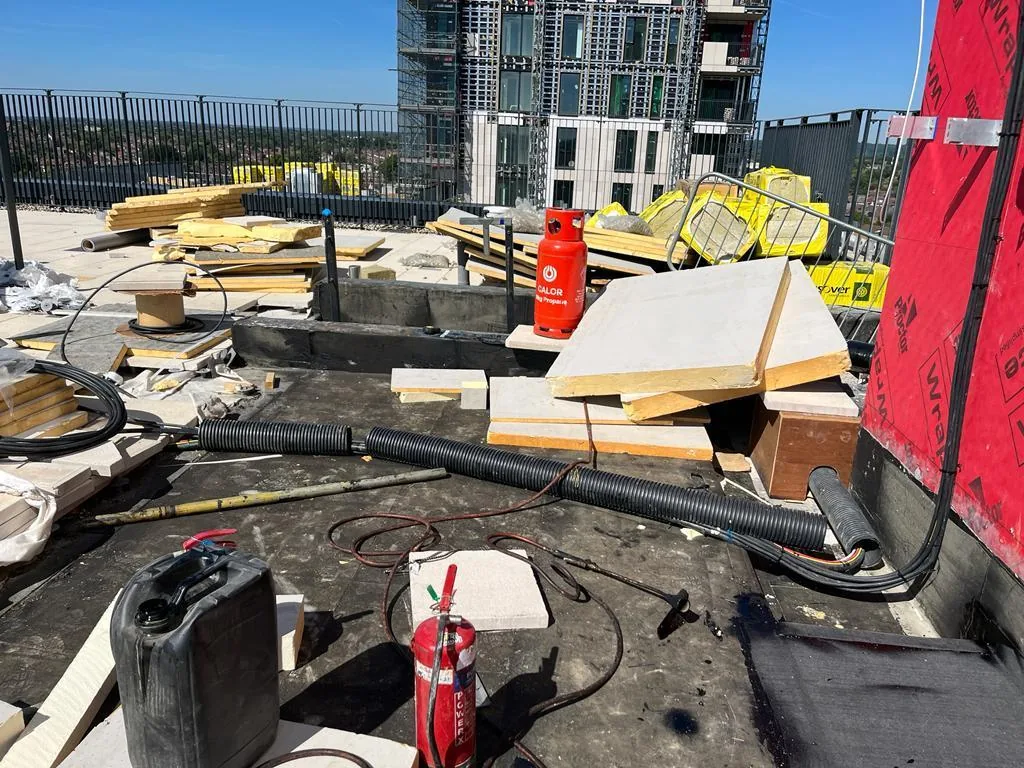
Andy Crane's 35+ years in the trade include running commercial projects at scale, from contracts management on a large Stratford, London rooftop against a fixed completion deadline, to emergency response and full waterproofing on a Parkdean Resorts holiday park, to industrial roofing across North America in conditions few UK roofers ever encounter. That background is exactly what a facilities manager needs from a PPM partner: someone who has managed roofs as programmes, not just as jobs.
How Often Should a Commercial Roof Be Inspected?
The baseline for any commercial roof is two professional inspections a year: a spring visit to assess post-winter damage, and an autumn visit to prepare the roof for harsher weather ahead. Every roof we maintain sits on at least that schedule, plus an inspection after any major storm.
Higher-risk roofs move onto a tighter schedule, older membranes, roofs carrying heavy plant, sites with significant tree debris, or high foot traffic from other trades. These typically step up to quarterly professional inspections, with more frequent visual walk-throughs by your own site team in between. The frequency scales with age and risk, but every roof stays on a documented, defensible schedule.
What's Included in Every PPM Visit
- Full condition survey, membrane condition, seams and laps, penetrations and flashings, perimeter edges, drainage hardware, and any ponding or structural stress
- Drainage hygiene, gutters, outlets, scuppers, drains and roof surface debris cleared, with extra attention going into autumn and after storms
- Minor repairs, same visit, resealing seams, patching punctures, stabilising loose flashings and tightening fixings, covered within the agreed scope with no extra call-out fee
- Technical diagnostics where needed, moisture mapping, thermal imaging and periodic core sampling on larger or more complex roofs, to catch hidden moisture before it becomes a bigger problem
- Full documentation, dated, labelled photographs, a defect schedule with priority ratings, and a written report suitable for your asset management system, insurer or warranty provider
- Emergency response, a defined response time for urgent leaks and storm damage, with inspection within 24–72 hours of severe weather
- Access governance, roof access limited to authorised personnel, with guidance for your site team on avoiding unnecessary penetrations that void manufacturer warranties
An Example Task & Frequency Schedule
Every contract is built around your specific roof and risk profile, but a typical schedule for a commercial or industrial estate looks like this:
| Task | Recommended Frequency |
|---|---|
| Professional roof inspection (full survey) | Twice yearly, spring & autumn |
| In-house visual walk-through | Monthly to quarterly |
| Gutter, outlet & scupper clearing | Quarterly, plus after storms |
| Moisture mapping / thermal imaging survey | Annually (complex or high-value roofs) |
| Core sampling | Every 3–5 years, where indicated |
| Condition summary report | Annually, per building |
| Emergency / storm response inspection | Within 24–72 hours of severe weather |
When to Repair, When to Replace
A PPM programme gives you the evidence to make that call properly rather than by instinct. As a rule of thumb, once cumulative repair costs on a roof approach roughly 25–30% of its full replacement value, replacement becomes the sounder economic choice. Tracking condition scores by zone and repair history over time, which every PPM visit feeds into, means that decision is backed by data when it lands on your desk, not guesswork under pressure after a leak.
Warranty, Insurance & Compliance
Manufacturers routinely build minimum inspection and documentation requirements into their warranties, which makes PPM a compliance matter as much as good practice. Insurers take the same view, expecting semiannual inspections, post-storm checks, drainage management and close attention to flashings, edges and penetrations. Our reporting, dated photo sets, defect logs and repair records, becomes the evidence you need if you ever have to make a storm damage or consequential loss claim, and helps demonstrate that reasonable care has been taken of the asset.
Planned Preventative Maintenance FAQs
Yes. For property portfolios and multi-site facilities, we run a rolling schedule across all your buildings with a single point of contact, consistent reporting, and a portfolio-level summary for asset and capital planning, not a separate arrangement for every site.
Minor issues, a loose fixing, a failing seam, a blocked outlet, are fixed on the same visit as part of the agreed scope, with no extra call-out charge. Anything beyond minor repair is logged with photos and a priority rating, and we'll quote for it separately before any further work goes ahead.
It should strengthen it. Most manufacturer warranties carry minimum inspection and documentation requirements, and insurers increasingly expect evidence of regular maintenance. Our dated photo reports and defect logs give you that evidence if you ever need to make a claim.
Every visit produces a written report with dated, labelled photographs, context, defect, and after-repair shots, plus a defect schedule with priority ratings. Reports are built to be usable in your own asset management system, not just filed and forgotten.
Yes. We work across single-ply membranes, reinforced bitumen (felt), GRP, profiled metal, and green roof systems, the full range found on commercial and industrial estates, from a single retail unit to a large warehouse or distribution centre.
We aim to inspect within 24–72 hours of a severe weather event for any site on a PPM contract, so new detail failures are caught and corrected before the next spell of bad weather arrives.
Protect Your Roof Asset With a Planned Maintenance Programme
Scheduled inspections, drainage care and minor repairs across Plymouth and Devon, with the reporting to back your capital planning and insurance position.
Or call our office: 01752 741888