
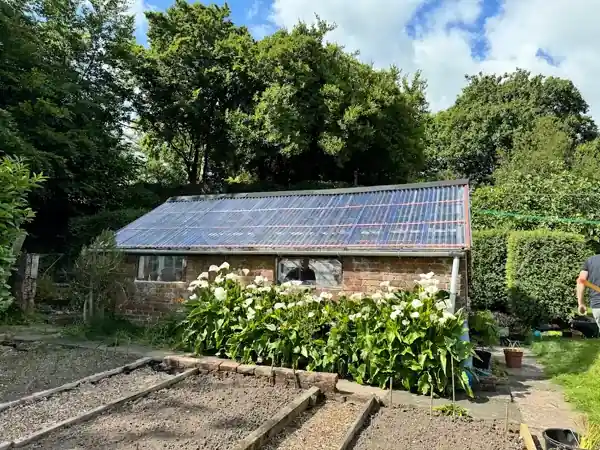
New Build Home Roof Maintenance
A new roof is low-maintenance, not no-maintenance. We check the details that tend to show up in the first few years of a new build, while you're still inside your builder's defects period.
"New" Doesn't Mean "Nothing to Check"
It's a natural assumption, the house is new, so the roof must be fine. In practice, the first few years of a new-build roof's life are exactly when small installation issues tend to surface: as the building settles and timber structures cure and move slightly, mortar joints at the ridge and verge can hairline crack, gutters that were level at handover can lose their fall, and flashings around roof lights or dormers that were finished quickly at first fix can start letting water in.
None of that means the roof was built badly. It's normal, and it's exactly what your builder's defects period exists to cover, but only if it's caught and reported while that window is still open. Sherford Roofing carries out roof checks and light maintenance for new-build homeowners across Plymouth and Devon, aimed squarely at catching these early-life issues before they become your problem instead of your builder's.
Where Your Warranty Actually Covers You
Most new-build homes come with a 10-year structural warranty, NHBC Buildmark or an equivalent from Premier Guarantee, LABC or a similar provider. It's worth understanding how the cover actually breaks down:
Builder's defects period, your builder must fix genuine build defects you report, usually at no cost to you.
Structural warranty insurance, covers major structural defects only, not routine wear or maintenance neglect.
Routine upkeep, gutter clearing, minor resealing and general care, is the homeowner's responsibility from day one.
That gap between "structural defect" and "maintenance issue" matters. A blocked gutter that overflows and saturates a fascia for two years isn't a structural defect, it's a maintenance failure, and it can complicate a claim even where the original blockage was arguably a builder's snagging item. Getting ahead of it early protects both the warranty and the roof itself.
What We Check
- Ridge and verge mortar, early hairline cracking from settlement, before it opens up and lets water track in
- Roof light and dormer flashings, a common source of minor leaks where detailing was rushed at first fix
- Gutters and downpipes, correct fall and secure fixing, since falls can drift as the structure settles in its first couple of years
- Small flat roof sections, porches, bay windows and dormer cheeks in GRP, EPDM or single-ply, checked to the same standard as the main covering
- Loft ventilation, ridge and soffit vents doing their job, since modern airtight new builds are more prone to trapped condensation if ventilation is marginal
- Solar panel mountings and penetrations, increasingly standard on new builds, and worth checking as an additional point where the roof covering has been penetrated
A Written Record, Not Just a Look
Every check comes with a short written report and dated photos. If we do spot something worth reporting to your builder or warranty provider, you'll have clear evidence to back the report, and if nothing needs fixing, you'll have a baseline record of the roof's condition, which is useful to have on file regardless.
New Build Roof Maintenance FAQs
Yes. A new-build roof is low-maintenance, not no-maintenance. Your 10-year structural warranty (NHBC Buildmark or equivalent) covers major structural defects, but day-to-day items like gutter clearing, checking mortar joints at the ridge and verge, and keeping roof lights and flashings sound are down to you from day one, and neglecting them can weaken a genuine warranty claim later if it's judged to be a maintenance failure rather than a build defect.
In the first two years, your builder is responsible for fixing genuine defects reported through the standard snagging process. From years two to ten, your warranty provider's insurance steps in, but only for major structural problems, not routine wear, not blocked gutters, and not damage that follows from a lack of basic upkeep. Cosmetic issues and general maintenance sit with the homeowner throughout.
Ideally before your builder's two-year defects period ends, that's your best window to get any installation snagging fixed for free rather than at your own cost later. After that, an annual visual check and gutter clear for the first five years is a sensible baseline, tightening up if you spot any early signs of a problem.
No, getting an independent inspection or having minor maintenance carried out doesn't affect your structural warranty. What can cause problems is unqualified work that damages the roof covering or voids a manufacturer guarantee on a specific system (like a flat roof membrane), so we always work in a way that protects, rather than complicates, your existing cover.
The recurring ones we see are: hairline cracking in ridge and verge mortar as the property settles in its first year or two, minor leaks around roof lights and dormer flashings that were rushed at first fix, gutters that have lost their fall as timber roof structures cure and move slightly, and condensation in the loft from insufficient ridge or soffit ventilation on newer, more airtight builds.
Yes. Most new-build homes have at least one small flat-roofed section, a porch, bay window, or dormer cheek, usually in GRP, EPDM or single-ply. These get exactly the same attention as the main roof covering, since they're a common early source of leaks if a detail wasn't finished properly at handover.
Protect Your New Build Roof, and Your Warranty
A quick check now can save a much bigger repair later. Free estimates across Plymouth and Devon.
Or call our office: 01752 741888