
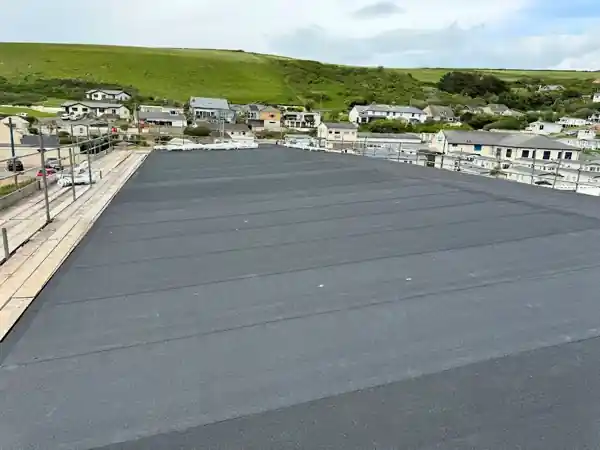
Warm Roof Construction
Insulation above the deck, not between the rafters, warm roof construction avoids the condensation risk that ventilated cold roofs are prone to.
A warm roof places continuous insulation above the structural deck, directly beneath the waterproofing membrane, rather than between the rafters. This keeps the structural timber and deck within the building's warm envelope, avoiding the cold bridging and condensation risk that a ventilated cold roof construction is prone to if the ventilation isn't detailed correctly.
It's now the preferred modern approach for flat roof construction, and is effectively required to meet current Building Regs Part L U-values without depending on a ventilated void. An inverted warm roof build goes a step further, placing the insulation above the waterproofing membrane itself, protecting it from UV and thermal stress, commonly used under ballast or paving on balconies and podium decks.
Our Process
Specify Build-Up
We confirm standard warm roof or inverted (protected membrane) construction based on the finish and use of the roof.
Vapour Control Layer
A vapour control layer is fitted to the deck to prevent moisture migrating into the insulation from inside the building.
Insulation
Continuous rigid insulation is laid above the deck (or above the membrane on an inverted build) to the thickness needed for Part L compliance.
Waterproofing
The chosen membrane, GRP, EPDM, single-ply or hot melt, is applied as a continuous, warm-roof-compatible system.
A correctly detailed warm roof build-up is the standard route to meeting current Building Regulations Part L thermal performance without the condensation risk associated with a poorly ventilated cold roof construction.
Warm Roof Construction FAQs
A warm roof places insulation above the structural deck, keeping the deck and timber warm and dry within the building envelope. A cold roof places insulation between the rafters, requiring a ventilated air gap above to prevent condensation, which is harder to detail correctly and more prone to problems.
It avoids cold bridging and condensation risk, and makes it far easier to meet current Part L U-value requirements without relying on roof void ventilation, which is difficult to guarantee works correctly over the life of the roof.
A build-up where the insulation sits above the waterproofing membrane rather than below it, protecting the membrane from UV and thermal stress, commonly used under ballast or paving on balconies and podium decks.
Need Warm Roof Construction?
Free estimates across Plymouth and Devon. Bauder certified, Checkatrade vetted, honest advice every time.
Or call our office: 01752 741888