
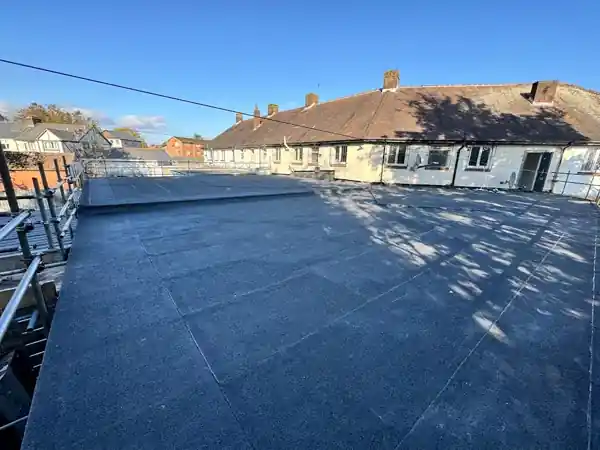
Understanding Felt Roofing Systems
Felt roofing remains one of the most cost-effective and widely used solutions for flat roofs across the UK. Built using SBS-modified bitumen membranes, felt roofing systems move with building settlement and thermal expansion, reducing the risk of splitting and tearing compared to traditional materials.
Despite advances in single-ply and liquid roofing technologies, felt continues to be specified for residential extensions, commercial buildings, and industrial structures due to its proven performance, ease of installation, and competitive pricing.
Types of Felt Roofing Systems
Three-Layer Pour-and-Roll Bitumen
This traditional system involves applying three layers of bitumen-impregnated felt, bonded with hot bitumen or cold adhesive. Typical service life ranges from 15 to 25 years, depending on exposure, maintenance, and installation quality.
Advantages:
- Cost-effective initial installation
- Well-understood technology with established installation practices
- Suitable for complex roof shapes and details
Limitations:
- Shorter service life compared to modern alternatives
- Requires skilled installation to avoid laps and poor bonding
- Vulnerable to UV degradation without mineral cap sheet protection
Torch-On SBS-Modified Felt
SBS (styrene-butadiene-styrene) modified bitumen membranes are applied using a gas torch to melt the underside, creating a strong bond with the substrate. Service life typically ranges from 20 to 30 years.
Advantages:
- Superior flexibility and movement accommodation
- Enhanced UV and weather resistance
- Faster installation compared to pour-and-roll systems
Limitations:
- Requires certified installers for safe torch application
- Not suitable for all substrates or confined spaces
- Higher initial cost than traditional felt
Mineral Cap Sheet Systems
The top layer of many felt roofs incorporates a mineral granule surface, providing UV protection, improved durability, and enhanced fire performance. These systems are fully bonded to create a robust, weatherproof membrane.
Advantages:
- Extended service life with UV protection
- Improved fire ratings for commercial applications
- Enhanced aesthetic appearance with granular finish
Common Felt Roof Problems
Blistering and Surface Cracking
Prolonged UV exposure causes bitumen to degrade, leading to surface cracking and blistering. This allows water to penetrate the membrane, causing leaks and substrate damage.
Causes:
- Lack of mineral cap sheet protection
- Exceeding design life
- Poor initial installation or inadequate bonding
Ponding Water
Flat roofs with insufficient falls allow water to pool, accelerating membrane deterioration and increasing the risk of leaks. Standing water also promotes algae and moss growth, further degrading the surface.
Solutions:
- Install additional outlets or scuppers
- Create falls using tapered insulation or screed
- Consider roof coating or overlay systems
Splitting at Joints and Upstands
Movement between roof sections, thermal expansion, and poor detailing can cause splits at joints, abutments, and upstands. These are common failure points requiring regular inspection and maintenance.
Puncture Damage
Foot traffic, dropped tools, and debris can puncture felt membranes, creating immediate leak paths. Regular access routes should be protected with walkway pads or boards.
Flat Roof Repair Options
Localised Repairs
For isolated damage, localised repairs offer a cost-effective solution. Typical costs range from £180 to £350 for felt patches, depending on access and damage extent.
Repair methodology:
- Grind back damaged area: Remove all deteriorated material to sound substrate
- Clean thoroughly: Use acetone or appropriate cleaner to remove contamination
- Apply fresh material: Install new felt patch oversized by at least 100mm on all sides
- Seal edges: Ensure all edges are fully bonded and sealed with appropriate mastic or bitumen
Section Replacement
When damage is more extensive but confined to specific areas, section replacement may be appropriate. This involves removing the affected area and installing a new membrane section, bonded to the existing roof.
Considerations:
- Ensure compatibility between old and new materials
- Check substrate condition and repair any rot or damage
- Verify falls and drainage are adequate
Full Roof Replacement
Full replacement becomes necessary when:
- The membrane exceeds 70% of its design life
- Widespread cracking or multiple leaks are present
- Structural movement has caused recurrent failures
- Substrate damage is extensive
Replacement options:
- Strip and replace: Remove existing felt, inspect and repair deck, install new system
- Overfelt: Install new membrane over existing (if substrate is sound and falls are adequate)
- Upgrade to alternative system: Consider GRP, EPDM, or single-ply for extended service life
Repair vs. Replace: Decision Framework
When to Repair
- Damage is localised (<20–30% of roof area)
- Roof is within expected service life (<15 years for felt)
- Substrate and insulation are sound
- Budget constraints limit capital expenditure
When to Replace
- Roof exceeds 70% of design life
- Multiple leaks or widespread deterioration
- Substrate damage or structural issues
- Recurrent repairs becoming cost-prohibitive
Cost Considerations
Indicative Pricing (2026)
| System Type | Indicative £/m² | Typical Service Life |
|---|---|---|
| 3-layer felt | £70–£100 | 15–25 years |
| Torch-on SBS | £90–£130 | 20–30 years |
| GRP overlay | £110–£160 | 25+ years |
| EPDM single-ply | £100–£150 | 25–40 years |
*Note: Prices exclude VAT and may vary based on access, location, and project size. *
Whole-Life Cost Analysis
While felt roofing has lower initial costs, whole-life cost analysis often favours alternatives like GRP or EPDM for long-term ownership. Consider:
- Initial installation cost
- Expected service life
- Maintenance requirements
- Replacement frequency
- Disruption costs during works
For example, a £100/m² felt roof lasting 20 years may cost more over 50 years than a £150/m² GRP roof lasting 50+ years, when replacement and disruption costs are factored in.
Maintenance Best Practices
Regular Inspections
Conduct visual inspections at least twice yearly (spring and autumn). Look for:
- Surface cracking, blistering, or erosion
- Ponding water or blocked outlets
- Damaged flashings, upstands, or joints
- Signs of leaks in interior ceilings
Debris Removal
- Clear leaves, branches, and debris from roof surface
- Ensure outlets, gutters, and drains are unobstructed
- Trim overhanging trees to reduce debris accumulation
Access Protection
- Install walkway pads for regular access routes
- Avoid unnecessary foot traffic on roof surface
- Use soft-soled footwear when access is required
Professional Surveys
Schedule professional roof surveys every 3–5 years to assess condition, identify potential issues, and plan maintenance or replacement programmes.
Commercial and Industrial Applications
For facility managers and commercial property owners, felt roofs should be incorporated into Planned Preventative Maintenance (PPM) programmes. Benefits include:
- Scheduled inspections: Identify issues before leaks occur
- Budget certainty: Plan and budget for repairs or replacements
- Compliance: Meet health and safety and insurance requirements
- Asset protection: Extend building lifespan and preserve value
PPM contracts can include annual surveys, priority call-out, minor repairs, and scheduled replacement programmes across multi-site portfolios.
Conclusion
Felt roofing remains a viable, cost-effective solution for flat roofs when installed correctly and maintained proactively. Understanding common failure modes, repair options, and replacement triggers enables informed decisions that protect your investment and minimise disruption.
Whether managing a single property or a commercial portfolio, prioritising flat roof maintenance through regular inspections, timely repairs, and strategic replacement planning delivers long-term value and peace of mind.